

Dubai Fitness Challenge returns from 31 October to 29 November 2026, according to the official organiser’s FAQs. The tenth edition invites people to make activity part of daily life. For anyone choosing a Dubai home, it is also a useful prompt: does the neighbourhood make an ordinary walk or workout convenient enough to repeat after the event ends?
A waterfront photograph is not a walkability assessment. The entrance to your building, the nearest safe crossing, a shaded route and a usable gym can influence daily activity more than the district’s reputation. This guide offers a practical shortlist, not an official ranking of Dubai’s most walkable communities.
Use the challenge to test a normal routine
The organiser’s 2026 event homepage lists Dubai Ride on 1 November, Dubai Stand Up Paddle on 7–8 November and Dubai Run on 22 November. These are useful calendar anchors, but event access and the day-to-day suitability of a home are different questions. Check current registration details directly before planning participation.
The broader 30-by-30 format is a useful housing test: can you find a convenient way to move for thirty minutes without a long drive, expensive membership or complicated preparation? That might be a walk, a swim, a gym session or a combination, depending on your preferences and ability.
During a viewing trip, set aside time for the actual route you would use. Start at the apartment door and finish there. Include lifts, access gates and crossings. You are testing the routine, not merely photographing the amenity.
Dubai Marina and JBR: a waterfront starting point
Dubai Marina is a strong candidate for buyers who enjoy an established promenade and access to everyday destinations on foot. Visit Dubai describes Marina Walk as a seven-kilometre waterfront path with shops and dining, and identifies connections through the local Metro and tram network.
The practical advantage is the possibility of combining exercise with errands or a social stop. Adjacent JBR brings another beachside setting to explore. Nevertheless, a tower’s precise position matters. Test how you reach the promenade, whether the building exit is convenient and where your preferred route becomes crowded.
Visit at the time you normally exercise. An early morning jog and an evening family stroll have different needs. If you prefer quietness, a busy leisure setting may not be the best fit even when its walking infrastructure is appealing.
For a purchase, inspect the gym and pool rather than accepting an amenity list. Ask about opening times, maintenance closures and access rules. A good outdoor setting does not compensate for a building whose indoor facilities you cannot comfortably use.
JLT: walking that connects to everyday life
Jumeirah Lakes Towers is worth considering when you want a neighbourhood route that also serves practical purposes. Visit Dubai’s JLT guide describes broad pedestrian routes around its lakes, parkland and shops at many tower bases. It also identifies DMCC and Sobha Realty Metro access for different parts of the district.
Think in clusters, not just the JLT name. Your home-to-station route, nearest supermarket and access to the park will differ with the building. Walk the route with a shopping bag or pushchair if that reflects your real life. Check ramps and level changes, as well as the distance shown on a map.
A usable everyday walk can be more valuable than a longer recreational route you rarely take. If you can replace a short taxi trip with a comfortable walk, activity becomes easier to sustain without scheduling a separate workout.
Compare the apartment’s outlook and indoor comfort too. The right location should support both movement outside and a restful home afterwards, especially for residents working shifts or spending substantial time at home.
Jumeirah and Umm Suqeim: consider the beach routine
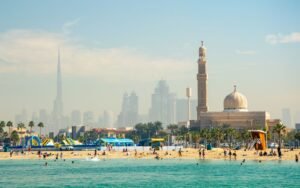
For buyers who genuinely enjoy being outdoors, the beachside areas around Jumeirah and Umm Suqeim merit a different type of search. Visit Dubai’s outdoor fitness guide highlights Kite Beach’s running track, beach activities and adjacent cycling route.
The important property question is whether the home gives you convenient access to the part of that setting you would use. Being described as “near the beach” does not establish a comfortable pedestrian route. Check road crossings, shade, entrance points and the return journey when carrying equipment.
These districts should not be treated as directly interchangeable with high-rise apartment areas. Available home types, purchase rights and budgets require property-specific checks. Do not assume every advertised home can be acquired under the same ownership arrangement simply because it shares an attractive neighbourhood label.
An ocean-facing lifestyle also needs a practical indoor alternative. Test storage for equipment, washing facilities, cooling performance and access to a gym or pool if those matter to your routine. A home should remain workable when weather or your schedule changes outdoor plans.
Al Jaddaf: inspect the route, not the promise
Al Jaddaf can suit people who value a Creek-side setting and cultural destinations, but its different pockets require careful comparison. Jameel Arts Centre’s visitor information places it in Jaddaf Waterfront and gives guidance for reaching it from Al Jaddaf Metro. That supports a specific outing; it does not establish continuous walkability across the whole district.
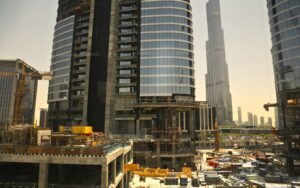
For a prospective home, trace the route to the waterfront, local shops and transit. Look for unfinished pavements, construction diversions and difficult crossings. An attractive master plan is not the same as an available path outside your door.
This is particularly important for off-plan buyers. Ask which public spaces and access routes are part of the initial handover and which belong to later phases. Include a realistic alternative if the intended route is not available when you move in.
The same method applies to any newer Dubai community: give more weight to confirmed, usable infrastructure than to a rendering populated with cyclists and pedestrians.
Compare communities with a personal activity scorecard
A useful shortlist begins with your actual habits. A runner, wheelchair user, parent with small children and cyclist may score the same building very differently. There is no universal winner.
| Your priority | What to test during a visit |
|---|---|
| Regular walking | A continuous route from the entrance with workable crossings |
| Running | Surface, interruptions, crowding and suitable times of day |
| Family outings | Pushchair access, places to rest and practical return options |
| Cycling | Suitable permitted routes, secure storage and lift access rules |
| Year-round exercise | Indoor facility quality, access hours and maintenance |
| Active commuting | The complete home-to-station or workplace journey |
Repeat the test after dark and during an ordinary working day where possible. Check lighting and visibility personally rather than relying on general assurances. Ask building management about bicycle storage and whether moving equipment through common areas is permitted.
Record costs alongside lifestyle benefits. Service charges, paid memberships and transport expenses affect the total budget. Verify building charges using the DLD Service Charge Index and the actual property records.
For investors, treat active-lifestyle appeal as a possible tenant preference, not proof of a rent premium. Compare real competing apartments and ask whether tenants will use the facilities enough to value them. A larger list of amenities can also mean higher costs, which must be justified by the property’s overall offering.
Compare available homes with the walking routes and facilities you have tested in person. The foreign-buyer guide explains the next steps if a community meets both your lifestyle priorities and purchase budget.
Frequently asked questions
1. When is Dubai Fitness Challenge 2026?
The official organiser gives 31 October to 29 November 2026 for its tenth edition. The dates are upcoming as of this guide’s 6 October research check. Recheck the organiser for individual event registrations and any programme changes.
2. Is taking part free?
The organiser states that joining the challenge is free, with many free activities, while some third-party events may charge. Check each event’s terms and registration requirements rather than assuming every associated activity has identical access conditions.
3. Which Dubai community is the most walkable?
There is no single verified winner in this guide. Marina, JLT, beachside districts and selected Al Jaddaf pockets offer different possibilities. Judge the exact building and your routine, including crossings, shade, access and the destinations you use most.
4. Should an active family choose a villa or an apartment?
Either can work. An apartment with convenient routes and well-run facilities may support more activity than a villa requiring a drive for every outing. Conversely, a suitable villa setting may better match your family’s space and outdoor preferences. Compare the actual daily routine.
5. Does walkability guarantee better investment returns?
No. It can help a home suit certain tenants and buyers, but returns still depend on purchase price, operating costs, competing supply, condition and achieved rent. Treat lifestyle advantages as one part of the analysis rather than a guaranteed financial premium.
Choose a home that makes movement convenient
Dubai Fitness Challenge is a useful occasion to explore neighbourhoods, but the most valuable discovery may be an ordinary route you enjoy repeating. A well-chosen home connects your preferred activities with the rest of your day and offers practical alternatives when plans change.
Contact Nova Domus with your budget, workplace and favourite activities. The team can help build a property shortlist around the routines you want to keep throughout the year.